Latest metadata
definition
The latest metadata is used to centrally display the latest metadata information of each source system and database table object in the current platform. It is the main viewing and maintenance entrance after the metadata collection results are accumulated. Users can query table-level metadata based on conditions such as source system, table name, table comments, and library name, and view basic table information, field information, versions, and change records.
Core competencies:
- ✅ Metadata query: Supports filtering the latest metadata based on source system, table name, table comments, library name, etc.;
- 📄 Table-level information management: display table-level attributes such as the associated library name, table name, table comments, description, release status, etc.;
- 🔍 Detailed viewing: Supports viewing metadata details such as basic information, field lists, versions and changes;
- ✏️ Information maintenance: Supports modifying table comments, descriptions, business leaders and other maintenance information;
- 🗑️ Metadata deletion: Supports deletion of invalid or no longer used metadata records.
Things to note
The latest metadata is usually automatically generated by the collection task. Before deleting metadata, please confirm that the data table no longer participates in governance processes such as asset inventory, lineage analysis, and data standard mapping.
Scope > For data governance personnel, data administrators, data developers and business data leaders, used to view and maintain the latest table-level metadata in the platform. It is suitable for scenarios such as data asset inventory, table structure query, field information confirmation, metadata change tracking, business responsible person maintenance and data governance assessment.
1. Latest metadata page
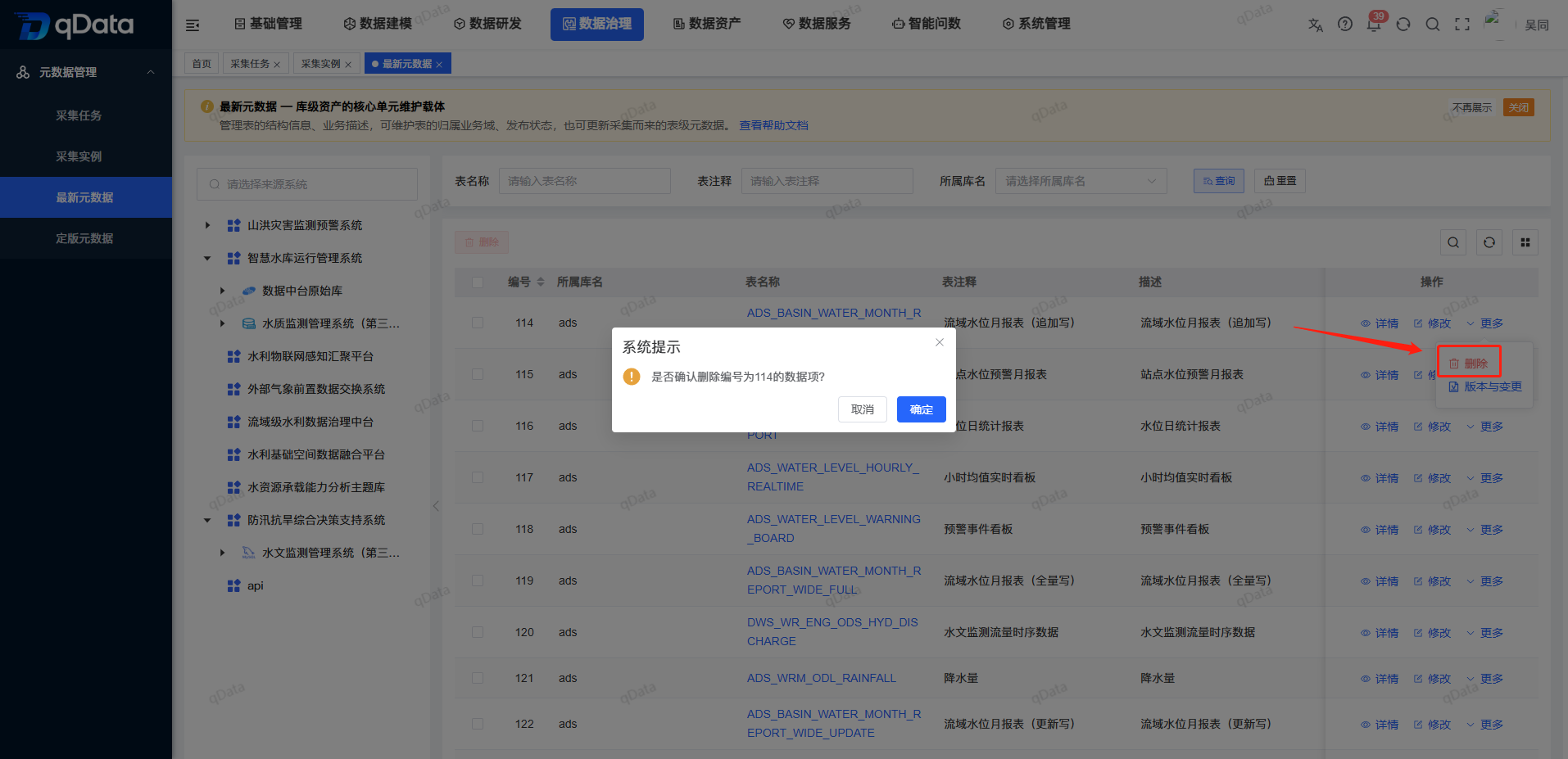
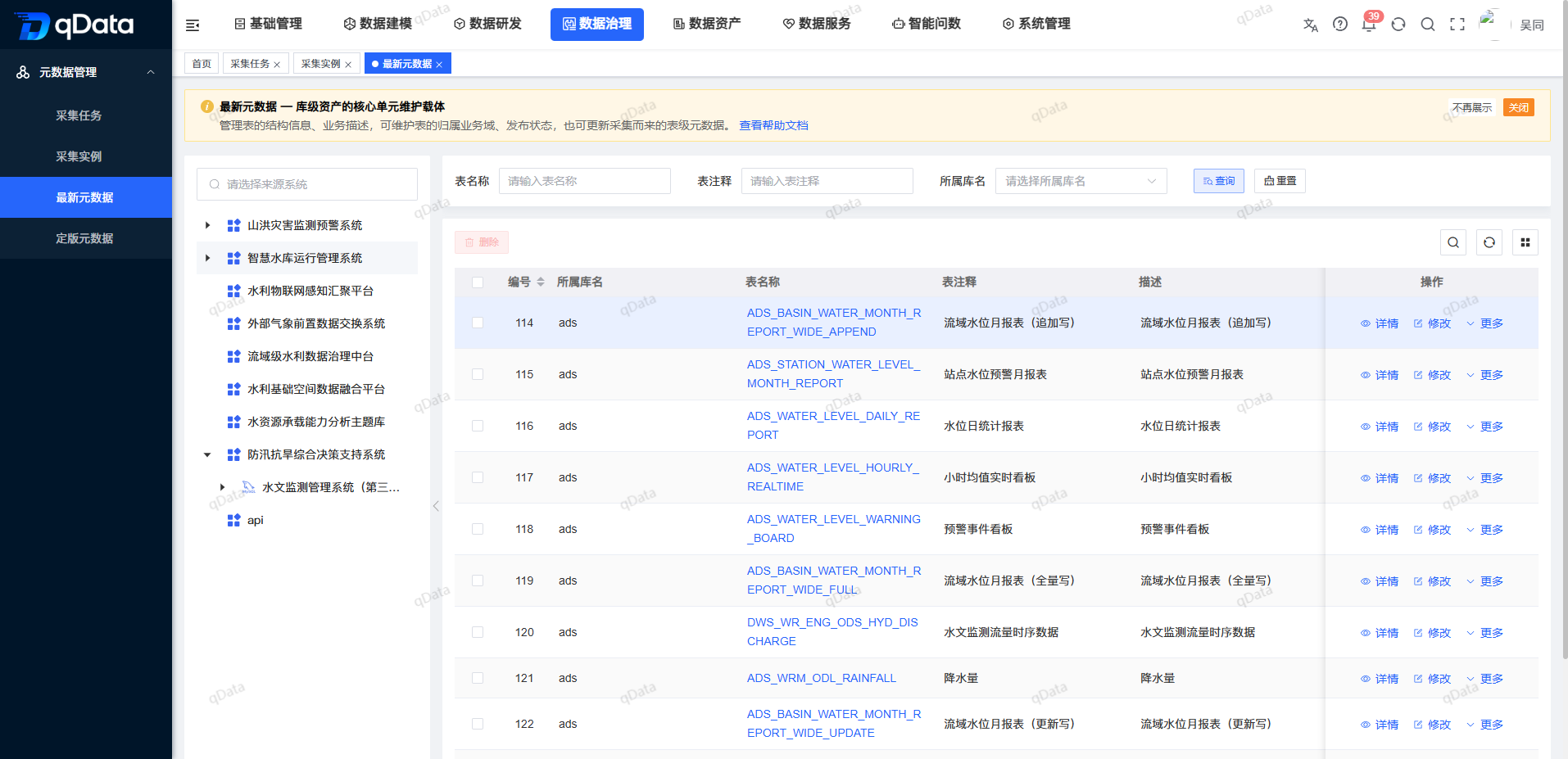
Click [Latest Metadata] under [Data Governance]->[Metadata Management] to enter the latest metadata page. The source system tree is displayed on the left side of the page, and the metadata list is displayed on the right side, which usually includes fields such as number, library name, table name, table comment, description, and operation. Users can query target metadata based on conditions such as source system, table name, table comments, and library name.
2. View metadata details
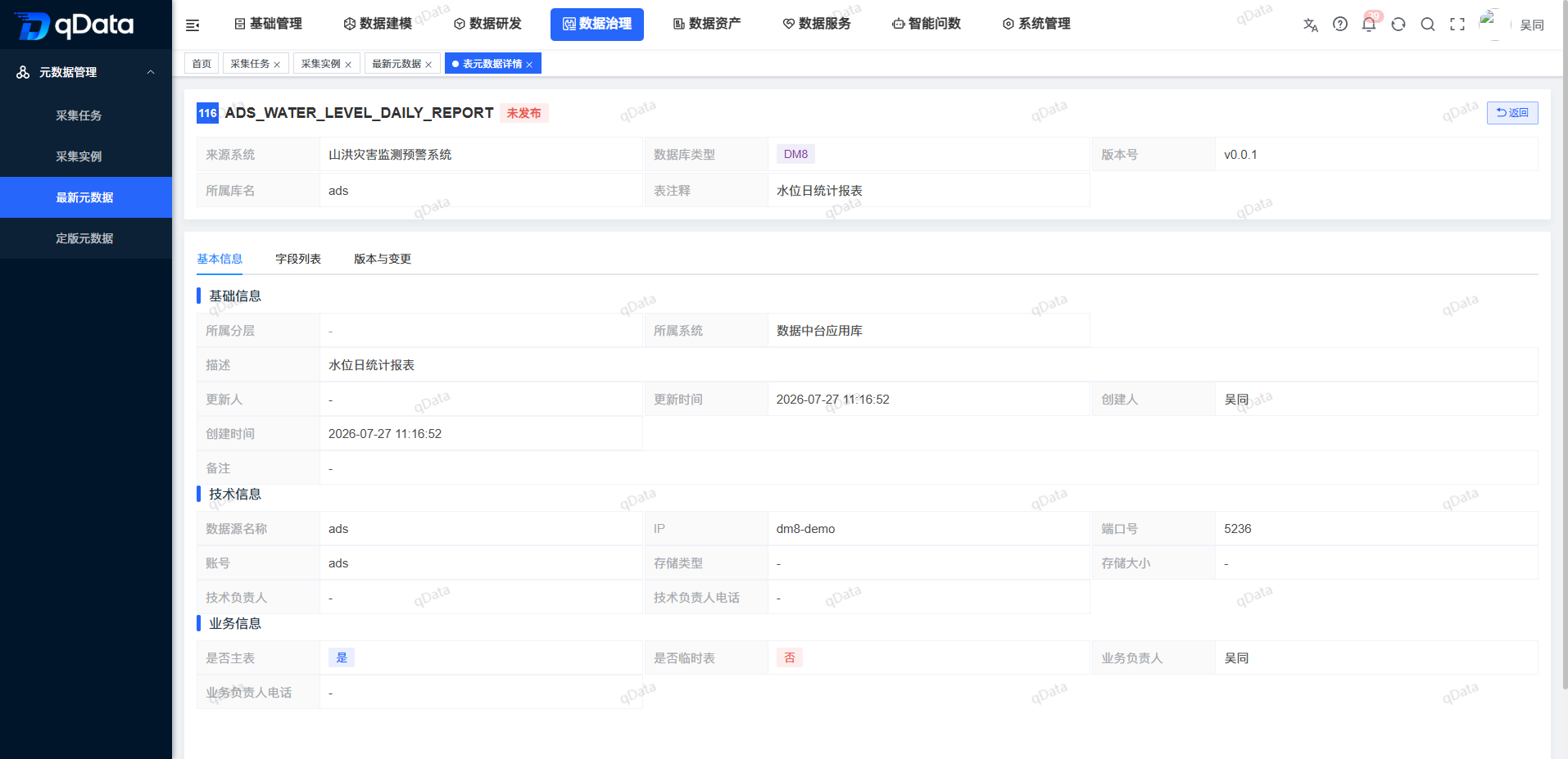
Select the metadata record you want to view and click the [Details] button in the operation column to enter the table metadata details page. The top of the details page displays overview information such as table name, release status, source system, database type, version number, affiliated library name, and table comments.
Basic information
In the [Basic Information] tab, you can view basic information such as the layer to which it belongs, the system to which it belongs, description, updater, update time, creator, creation time, remarks, etc. It also displays technical and business attributes such as data source name, IP, port number, account number, storage type, storage size, technical person in charge, business person in charge, whether it is a main table, whether it is a temporary table, etc.
Field information
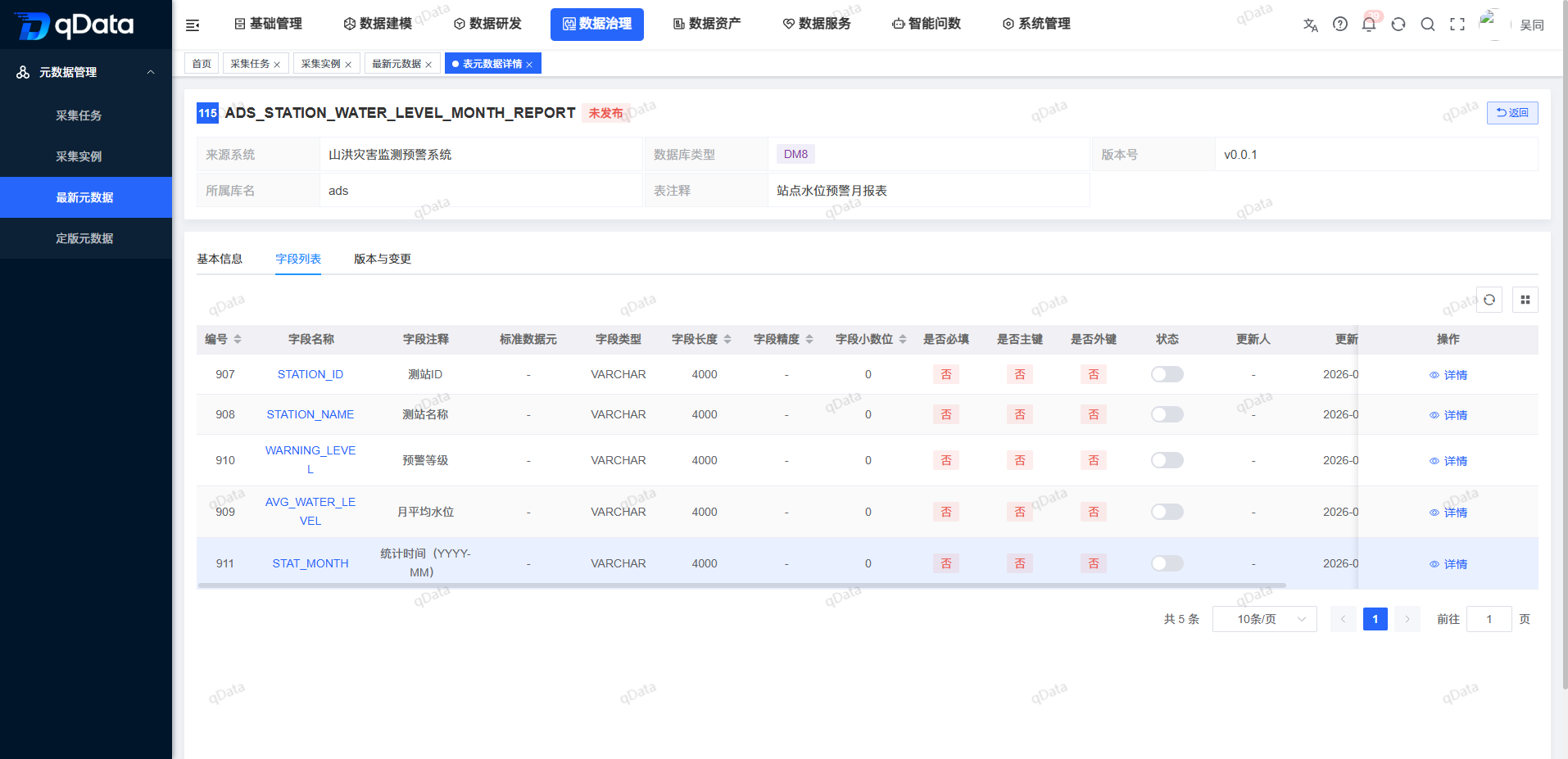
Switch to the [Field List] tab to view the field details under the table, including field name, field type, field comments, whether it is the primary key, whether it is empty, field order and other information. Field information can be used for table structure validation, indicator development, data standards mapping, and impact analysis.
Versions and changes
Switch to the [Version and Change] tab to view metadata version records and structural change information, which is used to track historical changes in table structure, fields, comments, etc., and to assist in determining whether the metadata collection results meet expectations.
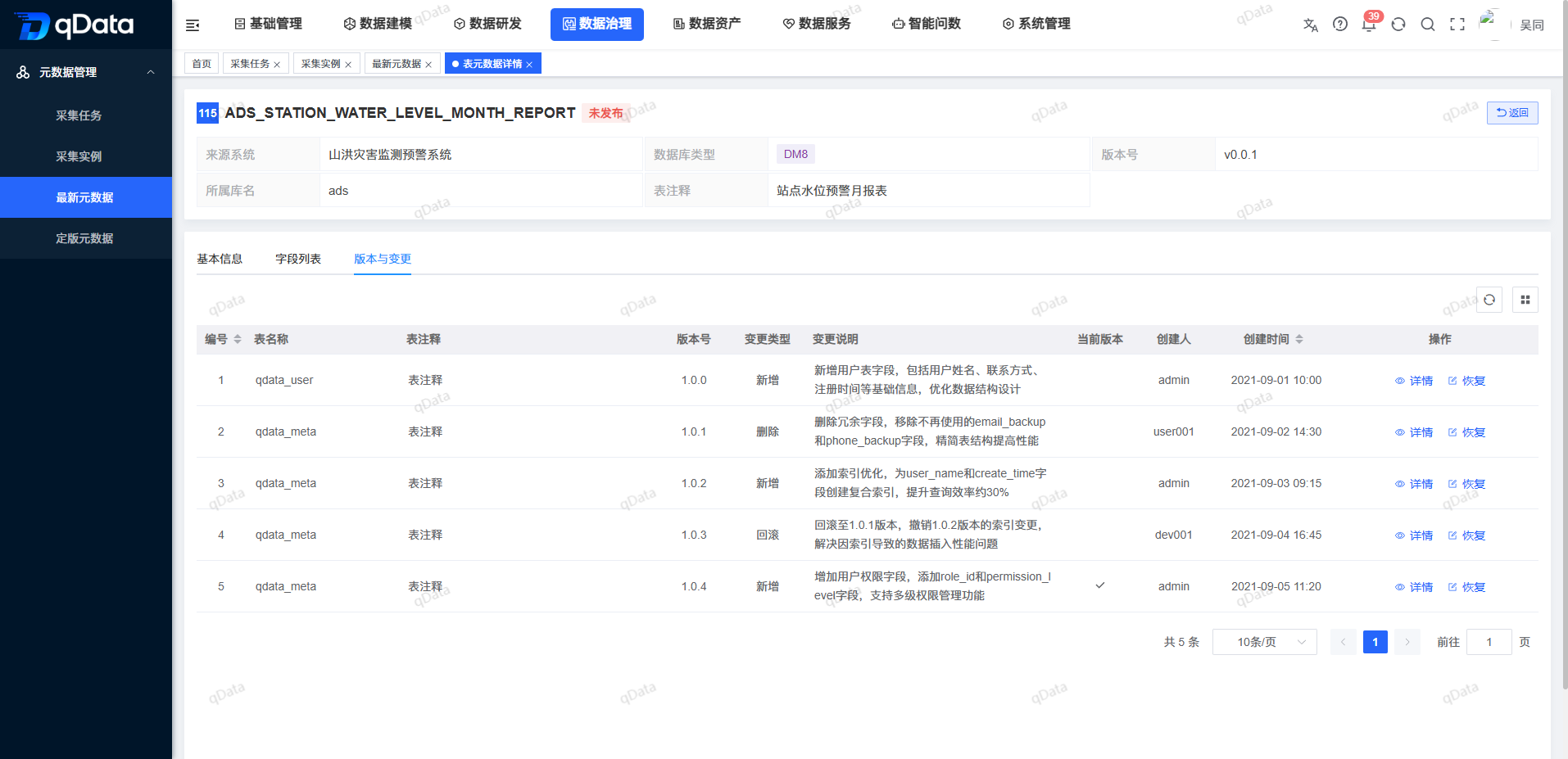
3. Modify the latest metadata
Select the metadata record that needs to be maintained, click the [Modify] button in the operation column, and adjust maintainable information such as table comments, descriptions, persons in charge, notes, etc. on the pop-up page or editing area. After confirming that the modified content is correct, click the [OK] button to complete the latest metadata information update.
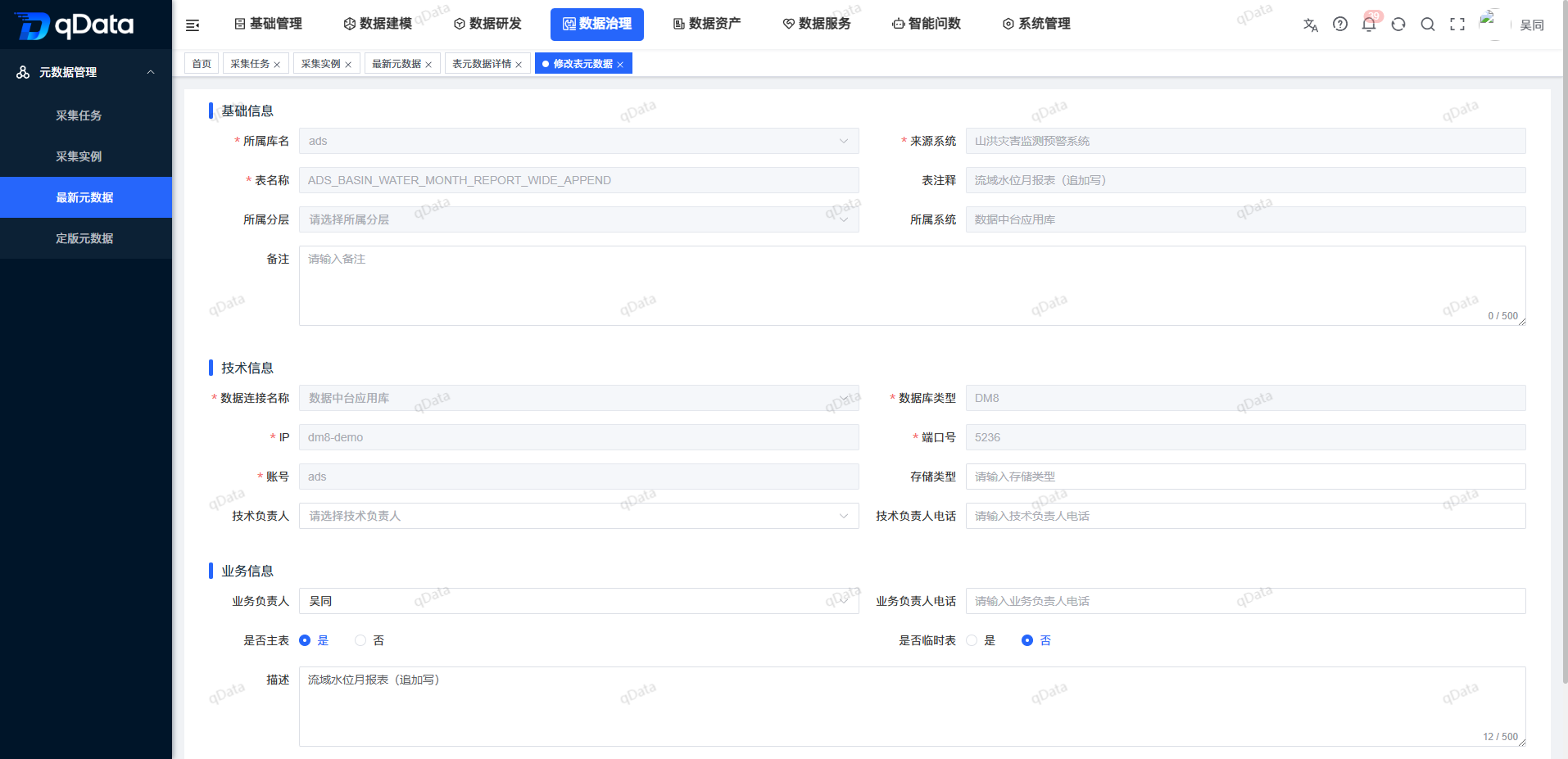
4. Delete the latest metadata
Select the metadata record to be deleted and click the [More]->[Delete] button in the operation column. The system will pop up a deletion confirmation prompt. After clicking [OK], the system will delete the metadata record.